
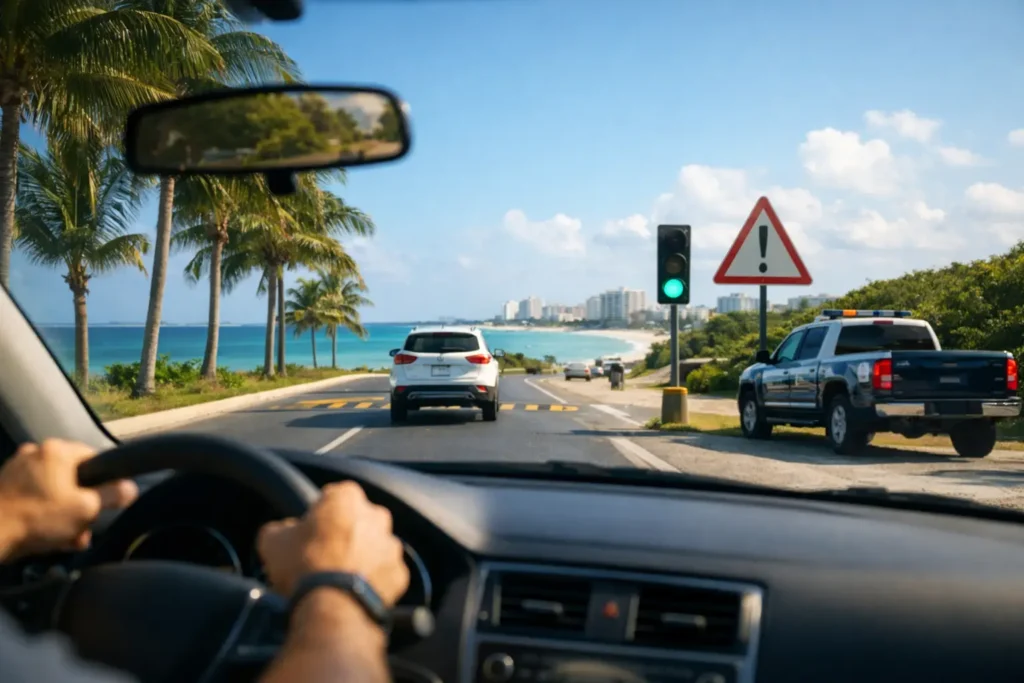
The first speed bump in Cancun can feel like it appears out of nowhere. That is why driving in Cancun safely starts before you leave the airport parking lot: get comfortable with the car, set your route, and expect the road to ask for your attention. With a little preparation, a rental car gives you the freedom to move between beaches, cenotes, restaurants, and towns on your own schedule.
Cancun and the Riviera Maya are very drivable for visitors. Major routes are straightforward, signs are common on tourist corridors, and destinations such as Puerto Morelos, Playa del Carmen, Tulum, and Valladolid are easy to reach by car. The key is not rushing. Drive defensively, follow local signs, and give yourself extra time when you are headed somewhere new.
Get Ready Before You Start the Engine
Before driving away, take a few minutes to inspect the vehicle. Confirm the fuel level, check that the lights and air conditioning work, and adjust mirrors and your seat. Take clear photos of the car’s exterior, wheels, windshield, and dashboard. This is a simple habit that keeps your rental process clear from the start.
Keep your driver’s license, rental agreement, and insurance information accessible, but do not leave documents or valuables visible in the car. A small bag that goes with you at every stop is the easiest option. If you are traveling with kids, make sure the right child seat is installed before departure, not after you reach a busy road.
Set up your navigation while parked. Cell service is generally reliable in populated areas, but downloading offline maps is useful for longer drives and areas with weaker signal. Enter the exact address or saved destination rather than relying only on a place name. Several attractions, restaurants, and beach clubs can have similar names.
Know the Rules of the Road in Cancun
Traffic drives on the right side of the road, just as it does in the United States. Seat belts are required for everyone in the vehicle. Speed limits are posted in kilometers per hour, not miles per hour, so pay close attention if you are used to reading mph. A number that seems low may be the correct limit for a hotel zone, residential street, or school area.
The most important rule is to follow posted signs, especially where traffic patterns change. Cancun’s Hotel Zone has roundabouts, pedestrian crossings, hotel entrances, and frequent turns. Stay in the correct lane early, use your signal, and avoid last-second lane changes. If you miss a turn, continue safely and let your navigation reroute you.
Do not assume you can turn right at a red light. Come to a full stop and follow the signs and traffic signals at that specific intersection. Pedestrians, cyclists, scooters, and delivery motorcycles can be close to your vehicle even when you have a green light, so scan carefully before moving.
Watch for topes and changing road conditions
Topes, or speed bumps, are everywhere in Mexico and are often placed near towns, intersections, pedestrian areas, and entrances. Some are well marked. Others are harder to see at night or in heavy rain. Slow down when you see warning signs, flashing lights, painted lines, or traffic ahead that is braking unexpectedly.
Road quality can change quickly once you leave the main highway. You may encounter potholes, uneven shoulders, construction zones, or narrow streets in smaller communities. Keep a comfortable following distance and avoid passing unless you have a clear view of the road ahead.
Choose the Best Times to Drive
Cancun traffic is manageable, but timing matters. The Hotel Zone can be busiest around breakfast, late afternoon, and dinner hours, while the roads around the airport may slow down when several flights arrive close together. Build a buffer into your plans, particularly if you have a restaurant reservation, tour departure, or flight to catch.
Daytime is the best time for first-time visitors to drive between destinations. The main routes are easier to read in daylight, and you will be better able to spot topes, turns, and roadside services. If you need to drive after dark, stay on established roads, keep your doors locked, and avoid taking unfamiliar shortcuts suggested by an app.
For longer trips, leave early. A morning drive to Tulum or a cenote gives you cooler temperatures, lighter traffic, and more time to enjoy the stop without feeling rushed on the return.
Parking Without the Stress
Use official parking lots whenever possible, especially in the Hotel Zone, downtown Cancun, Playa del Carmen, and Tulum. A staffed lot may cost more than street parking, but it is often worth it for the convenience and added peace of mind. Keep the parking receipt until you return to the car.
If you park on the street, read signs carefully and look for painted curbs, restricted zones, and loading areas. Never block a driveway, hotel entrance, or narrow street. At beaches and cenotes, park only in designated areas rather than on soft shoulders or isolated roadside spaces.
Do not leave phones, bags, sunglasses, or shopping bags on seats. Put items in the trunk before you arrive at your destination, not after you park. This small detail makes it less obvious that valuables may be inside.
Fuel Stops and Toll Roads
Many gas stations in the Riviera Maya are full service. Tell the attendant how much fuel you want before filling begins, and watch the pump display to make sure it starts at zero. Pay attention to the amount and keep your receipt. Carrying some Mexican pesos is practical for fuel, parking, small purchases, and tolls, although payment methods vary by location.
If your route includes toll roads, check ahead whether the booths accept the payment method you plan to use. Toll roads can save time on certain trips, but free roads may be a better fit if you want to stop in local towns or keep costs lower. The best choice depends on your schedule, destination, and comfort level.
Avoid letting the tank get too low on a road trip. Fuel stations are common on major routes, but they can be farther apart once you travel beyond the busiest tourist areas. Filling up before a long drive is easier than searching when the fuel light comes on.
Rain, Hurricanes, and Heat
Rain can arrive suddenly, especially during the wetter months. When roads are wet, reduce speed, increase following distance, and avoid sharp braking. Flooded streets can hide potholes or debris, so do not drive through deep standing water if you cannot judge the road beneath it.
During hurricane season, monitor local conditions and follow official instructions from your hotel, airport, or authorities. A rental car is helpful for flexibility, but it is not a reason to drive during severe weather. If conditions are poor, wait until it is safe.
Heat is another factor. Keep water in the vehicle, use sun protection, and never leave children or pets inside a parked car. Before a beach day, confirm where you will park and how far you will walk back in the afternoon heat.
What to Do if Something Goes Wrong
If you are stopped by police, remain calm, pull over safely, and keep your interaction respectful. Have your license and rental documents ready. Do not argue at the roadside. If you do not understand what is being said, ask politely for clarification and contact your rental company for support.
For an accident or emergency, move to a safe location if possible and call 911. Do not leave the scene of an accident. Contact the rental provider as soon as you can, take photos, and follow the instructions included with your rental agreement. This is where 24/7 assistance matters: you should not have to solve a travel disruption alone.
Driving in Cancun safely is less about knowing every street and more about making calm, practical decisions. Choose a vehicle that fits your group, plan your route, and keep your pace relaxed. With a straightforward rental experience from Roady, you can spend less time sorting out transportation and more time enjoying the Riviera Maya at your own pace.