
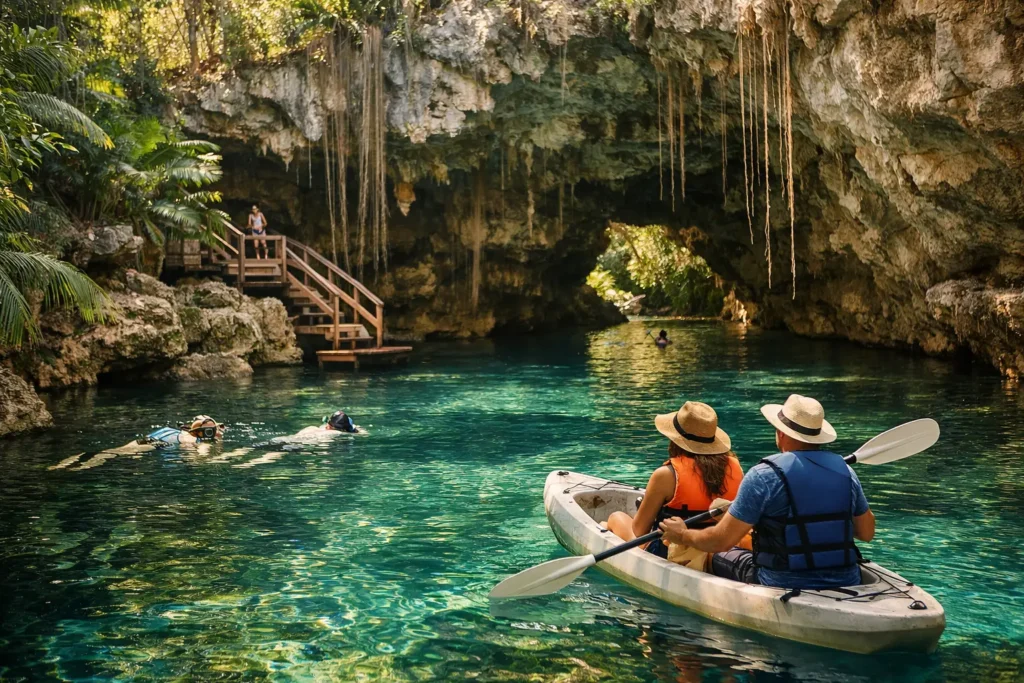
A cenote stop can be the highlight of a Riviera Maya trip, but it can also become a long, expensive detour if you choose it at random. The best ways to visit cenotes start with a simple plan: pick the type of experience you want, allow time for the drive, and arrive prepared to enjoy the water without rushing back to your hotel.
For travelers staying in Cancun, Playa del Carmen, Tulum, or anywhere in between, having your own car changes the day completely. You can leave early, skip the packed tour timetable, stop for breakfast on the road, and spend longer at the cenote that actually feels right for your group.
Plan Your Cenote Day Around Your Route
The Riviera Maya has cenotes in different directions, so trying to see several in one day without a route can mean more driving than swimming. Before you go, decide whether you want to explore around Puerto Morelos, take the inland roads near Playa del Carmen, head toward Tulum, or make a longer trip toward Valladolid.
A good rule is to choose one main area per day. If you are staying in Cancun, cenotes near Puerto Morelos or along the route toward Playa del Carmen make an easy half-day or full-day outing. From Playa del Carmen, you can reach several inland cenotes without committing to a long highway drive. Tulum is a practical base for cenotes south and west of town, while Valladolid works well if you want a more traditional Yucatan day trip.
Start earlier than you think you need to. Morning visits usually mean cooler temperatures, easier parking, and fewer groups in the water. They also give you room to adjust your plans if a cenote is busier than expected or if your group decides to stay longer.
Do not rely only on travel time shown on a map. Entrance roads may be narrow, speed bumps are common, and some cenotes are set back from the main road. Build in extra time for locating the entrance, parking, paying admission, and walking to the water.
Best Ways to Visit Cenotes for Your Travel Style
Not every cenote offers the same experience. Choosing the right type is one of the best ways to visit cenotes without spending your vacation on an activity that does not fit your group.
Open-air cenotes are usually best for travelers who want sunlight, room to swim, and an easy first experience. They often feel like natural swimming holes, with clear water, vegetation, and platforms or stairs for entering. These can be a strong choice for families and for anyone who prefers not to swim in enclosed spaces.
Semi-open cenotes combine sunlight with cave-like areas. You may find rock formations, shaded swimming sections, and more dramatic views without being completely underground. They are a good middle ground for couples or small groups looking for something more memorable than a regular swim stop.
Cave cenotes are darker, cooler, and more dependent on the conditions set by each property. Some are ideal for guided snorkeling or diving, while others may not be comfortable for young children, first-time swimmers, or anyone who feels uneasy in tight or dim spaces. Ask about life jacket requirements, depth, and whether a guide is needed before you pay admission.
If your priority is photos, look for a cenote with open light and time your visit early. If your priority is swimming, focus on places with clear access, ladders or stairs, and enough space to move around. For a relaxed day, pick one cenote with facilities such as restrooms, changing rooms, lockers, and food nearby instead of trying to check off three locations in a hurry.
Drive Yourself for More Flexibility
Tours can be convenient when you want every detail arranged, but they usually run on a fixed schedule and may include shopping stops or several activities in one day. Driving yourself gives you control over where you go, when you leave, and how long you stay.
A compact car or sedan is usually practical for popular cenote routes around the Riviera Maya. Main roads are generally straightforward, and most established cenotes have parking areas. Keep in mind that the final stretch can be uneven or unpaved, so drive slowly, follow signs, and avoid taking unfamiliar back roads after dark.
Before leaving, save your route offline and make sure your phone is charged. Cell service can be limited once you turn off the highway. Carry enough fuel for the round trip, especially if you are heading inland, and keep small bills available for parking, admission, lockers, or roadside snacks. Payment methods vary by location, so it is smart to confirm costs before you arrive.
With a rental car from Roady, you can build your day around your vacation instead of a pickup schedule. Airport pickup, unlimited mileage, and 24/7 support make it easier to head out with a clear plan and change it when you find a place worth staying for.
What to Bring and What to Leave Behind
Cenotes are natural environments, and the water stays cleaner when visitors come prepared. Pack light, but do not assume every site has the same amenities. A few practical items can make the difference between a smooth visit and an uncomfortable one.
Bring these essentials:
- A swimsuit and a dry change of clothes for the drive back
- Towels, water, and a small snack if food is not available on site
- Water shoes or secure sandals for slippery rocks and uneven paths
- Cash, a charged phone, and a waterproof pouch for valuables
- Biodegradable insect repellent only if the cenote allows it
Most cenotes ask visitors to shower before entering the water. Many also restrict sunscreen, makeup, body oils, and regular insect repellent because chemicals can damage the freshwater ecosystem. Read the rules at the entrance and follow them, even if you are only planning to swim for a short time.
Leave glass containers, speakers, and unnecessary valuables in the car or a locker. Cenote paths can be wet and rocky, and losing a phone or sunglasses in deep water is an easy way to interrupt an otherwise great day.
Swim Safely and Respect the Cenote
Clear water can make depth hard to judge. Enter slowly, use marked access points, and wear a life jacket if one is required or if anyone in your group is not a confident swimmer. Do not jump from a platform unless jumping is specifically permitted and you can clearly see the landing area.
Stay within designated swimming zones. Cenotes are connected to a sensitive underground water system, and many protected areas are not open for free swimming. Touching formations, feeding wildlife, or leaving trash behind can cause real damage to a place that took thousands of years to form.
For snorkeling or diving, use equipment that fits properly and follow the instructions of local guides. Certified cave diving is very different from casual snorkeling. If you want the cave experience but do not have diving training, choose a guided swim or snorkeling tour at a cenote designed for visitors.
Traveling with kids? Choose a site with shallow areas, visible staff, easy stairs, and life jackets in child sizes. Traveling as a couple or with friends? A smaller cenote may feel more peaceful, but check whether it has the facilities you need before committing to the drive.
Build a Day You Will Actually Enjoy
The best cenote days leave room for small surprises. Pair one swim with a local breakfast, a stop in a nearby town, or a late lunch after you dry off. Avoid planning a cenote visit immediately before an airport transfer or a dinner reservation far away. Wet clothes, traffic, and a longer-than-expected stop can quickly turn a relaxing outing into a stressful one.
If you want to visit more than one cenote, choose two that are close together and different in style, such as one open-air cenote for swimming and one semi-open cenote for scenery. That gives you variety without spending the entire day in the car.
Leave early, drive at a comfortable pace, and give yourself permission to stay where the day feels best. The Riviera Maya is more enjoyable when your itinerary has space for the water, the road, and the memories in between.