
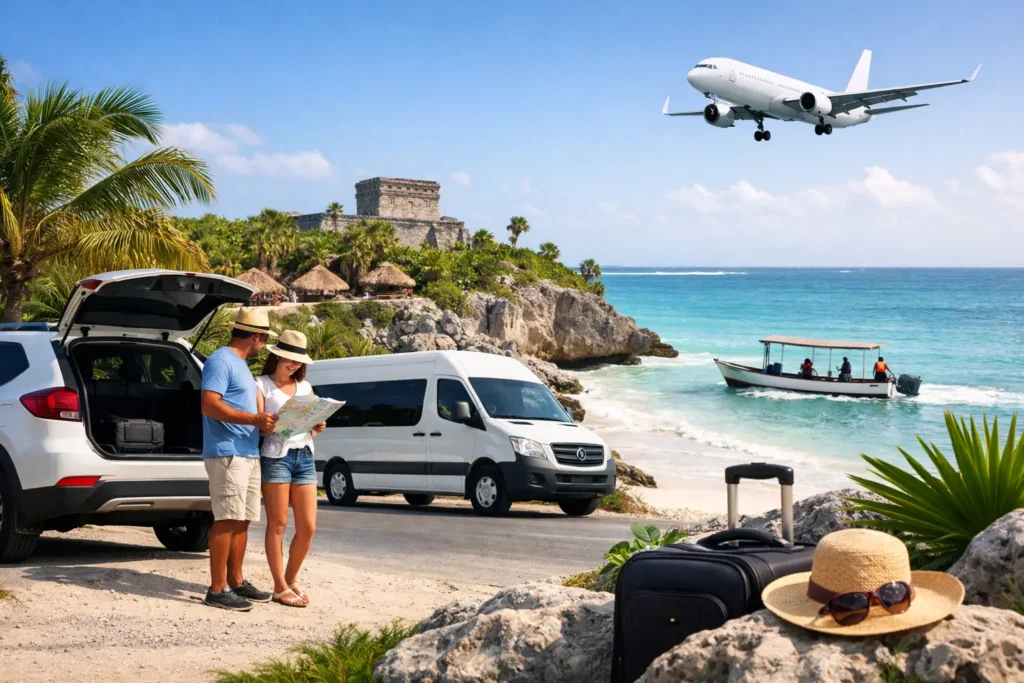
Landing in Cancun looks easy on paper until the real trip starts – airport transfer lines, taxi fares that change by zone, and tour schedules that decide your day for you. A good Riviera Maya travel mobility guide helps you avoid that trap. If you want your vacation to feel flexible instead of tightly managed, how you move matters almost as much as where you stay.
The Riviera Maya stretches across places that seem close on a map but can eat up time when transportation is poorly planned. Cancun, Puerto Morelos, Playa del Carmen, Akumal, and Tulum each have a different rhythm, and the best way to get around depends on your itinerary, budget, and tolerance for waiting. There is no single perfect option for every traveler. There is, however, a clear difference between moving freely and spending your trip adapting to someone else’s schedule.
Why mobility changes your Riviera Maya trip
Most travelers build their plans around beaches, ruins, cenotes, restaurants, and day trips. What often gets underestimated is the distance between those moments. You might have breakfast in Playa del Carmen, want an afternoon cenote stop near Puerto Aventuras, and still make dinner in Tulum. That kind of day is realistic with the right transportation and frustrating without it.
Mobility also affects cost more than many people expect. A low hotel rate can stop feeling like a deal if every outing requires multiple taxis or private transfers. On the other hand, renting a car is not automatically the cheapest choice for everyone. If you plan to stay in one area and mostly walk, paying for a vehicle you barely use may not make sense. The best decision starts with how often you will move, not with the cheapest headline price.
Riviera Maya travel mobility guide: your main options
Public transportation exists and can work well for certain routes. The ADO bus is useful for airport and city-to-city travel, especially if you are moving between major hubs like Cancun, Playa del Carmen, and Tulum. It is usually a solid choice for travelers packing light and sticking to a simple plan. The trade-off is obvious – once you leave those main corridors, convenience drops fast.
Colectivos, the shared vans running along Highway 307, are a budget-friendly option and part of the local travel rhythm. They can be practical for short hops between towns or beach access points. Still, they are not ideal if you have luggage, kids, beach gear, or a day built around several stops. They save money, but they cost flexibility.
Taxis are easy to find in high-traffic tourist areas, but pricing can vary a lot by location and timing. They are useful for short rides, nights out, or travelers who do not want to drive at all. The downside is that repeated taxi use adds up quickly, especially when you start visiting cenotes, beach clubs, and attractions outside town centers.
A rental car is usually the strongest option for travelers who want to explore beyond one hotel zone. It gives you control over departure times, route changes, and spontaneous stops. That matters in the Riviera Maya because some of the best parts of the trip are the places you fit in between the big attractions – a quiet beach, a roadside lunch spot, or a cenote you would skip if every transfer had to be negotiated.
When renting a car makes the most sense
A car is usually worth it if you are staying for at least three days and plan to move between more than one base area. Couples doing beach days plus dining outings, families juggling bags and snacks, and small groups splitting costs often get the most value from having their own vehicle.
It also makes sense if you are flying into Cancun but not staying there. Getting from the airport to Playa del Carmen or Tulum is easy enough once. Doing that, plus side trips, plus return transfers, often turns into a chain of bookings and waiting times. With a car, your arrival and departure feel simpler because they are part of the same plan.
The main trade-off is parking and driving confidence. In busy areas like central Playa del Carmen or parts of Tulum, parking can take patience. If you dislike driving in unfamiliar destinations, relying on a car every day may add stress instead of removing it. That is why the right question is not “Should I rent a car?” but “Will I actually use the freedom it gives me?”
What driving in the Riviera Maya is really like
For most visitors, driving in the Riviera Maya is straightforward. The main route, Highway 307, connects the key destinations and is easy to follow. Roads between major tourist areas are generally manageable, and the learning curve is lower than many first-time visitors expect.
That said, local driving has its own patterns. Traffic can build around airport access, Playa del Carmen, and Tulum during peak hours. Speed bumps appear often, including in places where you may not expect them. Signage is usually enough for basic navigation, but relying on your phone map is still the smartest move.
Fuel planning matters more once you head farther south or start making multiple side trips in one day. So does daylight. While many travelers do drive after dark without issue, daytime travel is easier if you are unfamiliar with the roads, especially when your route includes cenotes, smaller beach roads, or less-developed areas.
Airport pickup or local transportation later?
If you already know you want freedom during most of your stay, airport pickup is usually the better move. You avoid arranging a separate transfer, and your trip starts on your own timing. After a flight, that simplicity matters.
Waiting until later can work if your first days are fully walkable, like a short stay in central Playa del Carmen. But many travelers end up paying for transfers first and then renting anyway once they realize they want to see more. That split plan is not wrong, but it is often less efficient.
A practical option is choosing a compact or sedan that keeps things simple. Most travelers in the Riviera Maya do not need a large vehicle. If your plans revolve around beaches, towns, restaurants, and standard day trips, a practical model is usually enough and easier to park.
How to avoid the usual rental headaches
This is where many travelers get cautious, and for good reason. The frustration is rarely about the car itself. It usually comes from confusing terms, slow pickup, hidden add-ons, or vague coverage details.
The easiest way to avoid that is to keep your booking simple and direct. Confirm what is included before arrival. Check pickup logistics, required documents, mileage policy, and what kind of support is available if something changes during the trip. Clear terms save more stress than a slightly lower rate with too many conditions attached.
This is also why travelers often prefer providers that focus on fast service, straightforward documentation, and transparent pricing. In a destination built around vacation time, nobody wants to lose the first hour of freedom at a rental counter. Companies like Roady stand out when they keep the process practical, offer airport pickup, and remove the hidden-fee feeling that gives car rental a bad reputation.
Best mobility strategy by traveler type
If you are a couple on a flexible getaway, a rental car usually gives you the best balance of freedom and cost control. You can move between beach clubs, restaurants, and towns without checking transfer times all day.
If you are traveling with kids, convenience becomes even more valuable. Bags, snacks, changes of clothes, and tired afternoons are much easier to manage when the car is already yours for the trip.
If you are a solo traveler staying in one central area, public transportation and occasional taxis may be enough. The same goes for travelers focused on nightlife in one destination rather than regional exploring.
If you are in a small group, the math changes fast in favor of a car. Splitting costs often makes it more practical than booking repeated rides, and the group keeps control over timing.
Build your trip around freedom, not transfers
The Riviera Maya is one of those places where a loose plan often leads to the best memories. A beach you stay at longer than expected, a lunch stop you did not plan, a cenote detour because the day is still young – those moments depend on mobility. The less your trip depends on lines, negotiations, and fixed departures, the more natural it feels.
That does not mean every traveler needs a car every day. It means your transportation should fit the kind of vacation you actually want. If your goal is to move easily, save time, and keep your schedule in your hands, choose the option that gives you room to enjoy the destination instead of managing logistics the whole way. The Riviera Maya is better when you can just go.