
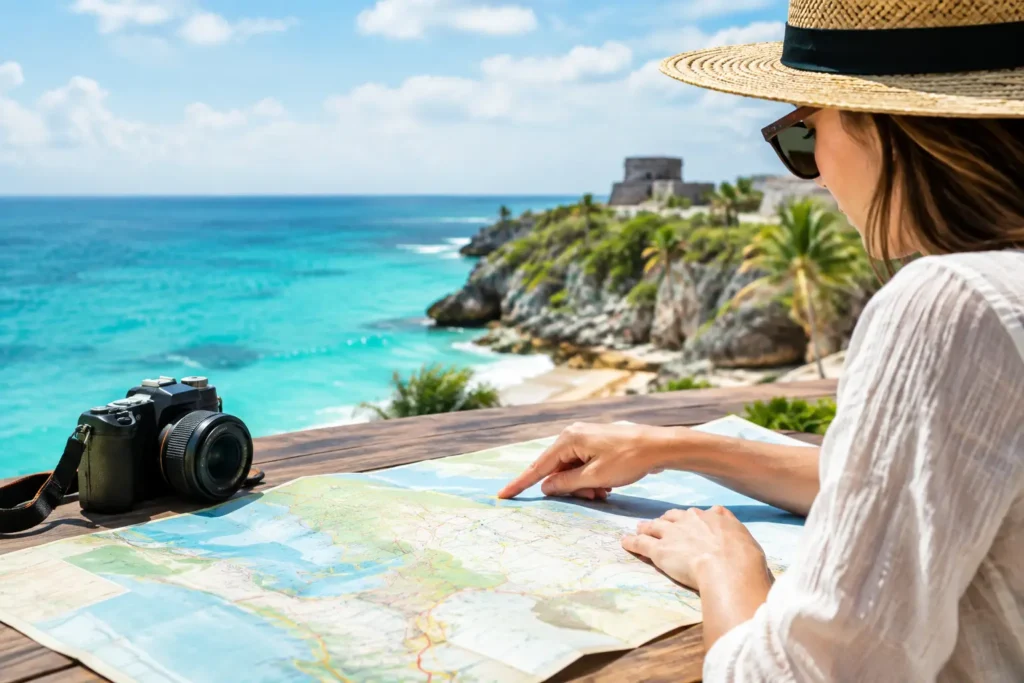
A Riviera Maya itinerary can look easy on a map: breakfast in Cancún, a cenote near Puerto Morelos, lunch in Playa del Carmen, then sunset in Tulum. In practice, knowing how to plan multiple stops is what keeps that day exciting instead of rushed. Distances, traffic, parking, opening hours, and the heat all affect how much you can comfortably do.
A rental car gives you the freedom to choose your own pace, but a good route still needs a little structure. The goal is not to visit every place on your list. It is to build a day that leaves room for the stops that make the trip memorable.
Start With One Direction, Not a Long Wish List
The Riviera Maya runs along the coast, and most visitors travel between Cancún, Puerto Morelos, Playa del Carmen, Akumal, and Tulum. The easiest way to organize a multi-stop day is to move in one direction rather than driving back and forth.
For example, if you are staying in Cancún and want to spend the day south of the city, group your stops by location. You might start early at a beach or cenote near Puerto Morelos, continue to Playa del Carmen for lunch, and choose one final activity farther south. Driving north, then south, then north again may look manageable on a map, but it takes time away from the destination.
Think of your route as a line, not a loop, unless you are staying close to your hotel. This simple choice can reduce unnecessary driving, fuel use, and the stress of watching the clock.
Choose a Main Stop and Two Supporting Stops
A common planning mistake is treating every stop as equally important. A beach club, archaeological site, restaurant, and cenote all require different amounts of time. Pick one main experience for the day, then add two shorter stops around it.
If Tulum’s ruins are your main stop, plan around the time you need there. Add breakfast before you leave and a beach or cenote afterward, rather than trying to include Playa del Carmen, Akumal, and Tulum town in the same day. You will see more when you are not constantly packing up and moving on.
For a relaxed vacation day, three stops are usually enough. Four can work if some are quick, such as a coffee stop, scenic viewpoint, or grocery run. More than that often turns your day into a checklist.
How to Plan Multiple Stops Around Real Travel Times
Navigation apps are useful, but their estimated drive time is only part of the picture. Add time for finding parking, walking from the lot, checking in, buying tickets, and getting everyone back into the car. A 35-minute drive can easily become an hour from door to door.
When building your schedule, give each type of stop a realistic time block. A cenote may take two to three hours once you include changing, swimming, and relaxing. A meal in Playa del Carmen can take longer than expected during busy hours. Beaches can be flexible, while a guided activity or archaeological site may have fixed entry times.
Leave a buffer of at least 20 to 30 minutes between major stops. This is especially helpful when traveling with children, carrying beach gear, or visiting during high season. A buffer also gives you options if you find a local restaurant, roadside fruit stand, or quiet stretch of coast worth enjoying.
Plan Your First Stop Early
The best time to cover distance is often early in the morning. Roads are generally calmer, temperatures are more comfortable, and popular attractions are less crowded. Starting early can also make parking easier in places like Playa del Carmen and Tulum.
If you have a timed reservation, build the whole day around it. Arrive early rather than calculating your route down to the minute. In a vacation destination, unexpected delays happen: a busy gas station, a wrong turn, rain, or traffic near a hotel zone. Getting there early is far better than cutting a planned visit short.
Check Hours, Entry Rules, and Parking Before You Go
A smart route can fall apart if one of your stops is closed or operates on a limited schedule. Before leaving, confirm opening hours, last entry times, parking availability, payment methods, and whether reservations are required.
This matters most for cenotes, beach clubs, nature reserves, and archaeological sites. Some locations limit visitor numbers, while others close earlier than you might expect. Many smaller attractions have limited parking, so it is useful to have a backup stop nearby.
Parking deserves its own plan in popular areas. Downtown Playa del Carmen can be busy, and Tulum has different parking arrangements depending on whether you are visiting the ruins, beach zone, or town. Avoid leaving valuables visible in the car, even for a short stop. Bring only what you need, keep your belongings organized, and use official parking areas when available.
Build Your Route for the Kind of Trip You Want
There is no single best route for every traveler. Couples looking for a slower day may want a scenic drive, a swim, and a long lunch. Families may prefer fewer locations with reliable facilities, shade, restrooms, and easy parking. A group of friends might put a beach club or nightlife plan at the center of the day.
A few route styles work particularly well in the Riviera Maya:
- Beach and food day: Start at a quieter beach, plan lunch in Puerto Morelos or Playa del Carmen, then make one final stop for shopping or sunset.
- Cenote day: Choose one or two cenotes in the same area, bring towels and dry clothes, and avoid scheduling a formal dinner immediately afterward.
- Tulum day: Visit the ruins early, take a break for lunch, then choose either a beach stop or a cenote. Trying to fit both into a tight afternoon can feel rushed.
- Family day: Combine a short drive, a swim-friendly stop, lunch, and time back at your hotel or rental before evening plans.
The trade-off is simple: the more time you spend driving, the less time you spend enjoying the places you came to see. Choose stops that match your energy level, not just the most popular pins on a map.
Keep Your Car Ready for a Full Day Out
Multiple stops are easier when the car is set up before you leave. Keep water, sunscreen, sunglasses, a phone charger, and cash for small purchases or parking within reach. If you plan to swim, bring a separate bag for wet clothes so the rest of your things stay dry.
Fuel is another detail that is easy to overlook. Do not wait until the end of the day to refill, particularly if you are returning from a less developed area or have an early activity the next morning. A quick stop at a gas station before heading back to your hotel can save time later.
When you rent with a company such as Roady, choosing a practical compact or sedan can make daily routes simpler. You have room for beach bags and luggage, while still having an easy-to-handle car for hotel areas, parking lots, and town streets. Unlimited mileage also gives you more flexibility to change plans without worrying about every extra mile.
Use Technology, but Keep a Backup Plan
Save your key stops in your navigation app before leaving your hotel. It helps to label them in order: first stop, lunch, main activity, and return point. Downloading an offline map is a good precaution if your signal becomes unreliable outside major tourist areas.
Still, do not let an app decide every part of your day. A route may be technically faster but less pleasant, or it may send you through a busy area at the wrong time. If you are enjoying a stop, give yourself permission to stay longer and remove the least important item from the plan.
It is also wise to keep one backup restaurant, beach, or cenote in the same zone. If parking is full, weather changes, or a place is more crowded than expected, you can adjust without losing the whole day. Flexibility is one of the biggest benefits of having your own transportation.
Make the Return Drive Part of the Plan
Do not treat the drive back as an afterthought. Night driving can feel different after a full day in the sun, especially if you are unfamiliar with the roads. Check your expected return time, leave enough fuel, and avoid scheduling a late dinner across town if everyone will be tired.
A well-planned multi-stop day should end with energy left for the evening, not a scramble to make it back. Give yourself room to pause for dinner, stop for groceries, or return early and enjoy your hotel. The best routes are not the ones with the most pins on the map – they are the ones that let you experience the Riviera Maya on your own terms.