
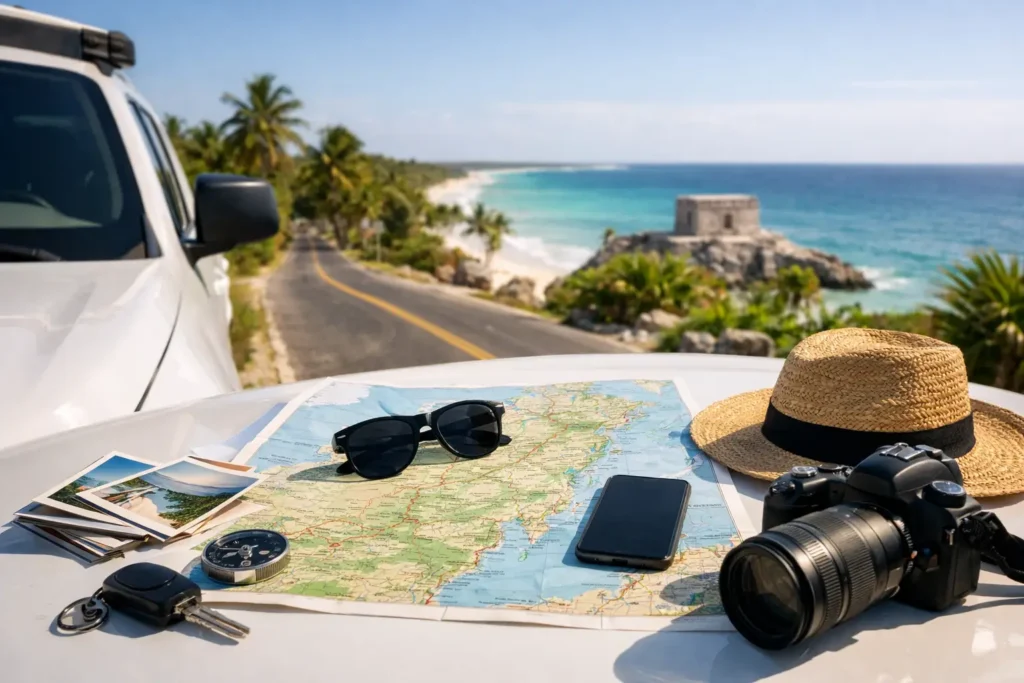
Landing in Cancun with a loose itinerary sounds fun until you start juggling airport transfers, tour pickup times, and taxi fares that add up fast. If you’re figuring out how to plan Cancun roadtrip days that actually feel easy, the best move is to build your route around drive times, parking, and the kind of trip you want – not just the places that look good on a map.
A Cancun road trip can be relaxed and flexible, but only if you plan a few basics before you arrive. The good news is that the Riviera Maya is one of the easiest regions in Mexico to explore by car. Major routes are straightforward, day trips are close enough to mix and match, and having your own vehicle gives you control over your schedule instead of locking you into tours or expensive last-minute rides.
How to plan Cancun roadtrip days around your real trip
Start with the number of days you actually have, not your wish list. A common mistake is trying to cover Cancun, Playa del Carmen, Tulum, multiple cenotes, Chichen Itza, and island activities in one short trip. On paper it fits. In real life, it turns your vacation into backtracking, rushed lunches, and too much time in the car.
If you have three to four days, keep your route tight. Cancun, Puerto Morelos, Playa del Carmen, and a cenote stop make sense together. If you have five to seven days, you can add Tulum, Akumal, Valladolid, or Chichen Itza without feeling like you’re constantly packing up and moving.
Think in clusters. North of Cancun gives you easier beach time and shorter local drives. South toward the Riviera Maya works better for travelers who want ruins, cenotes, beach clubs, and food stops in the same trip. The more you group nearby destinations, the more freedom you keep during the day.
Choose the route before you choose the activities
This is where planning gets practical. Many travelers pick attractions first and only later realize that opening hours, traffic, and heat change everything. A beach morning in Tulum sounds great until you leave Cancun after breakfast and hit traffic, then spend midday parking in the hottest part of the day.
A better approach is to map your overnight base and build outward. If you’re staying in Cancun the whole time, plan one long-drive day, one southbound beach day, and one easy local day. If you’re splitting the trip between Cancun and Playa del Carmen or Tulum, keep driving on transfer days and make your non-transfer days lighter.
For example, Chichen Itza works best as an early departure day with very little else added beyond a meal and maybe one nearby stop. Tulum pairs better with Akumal, a cenote, or a slow beach afternoon. Isla Mujeres is not really a car day, so don’t force it into a road trip schedule.
The trade-off is simple. A packed route lets you say you saw more. A cleaner route usually means you enjoyed more.
Pick the right car for a Cancun road trip
You do not need a large SUV to get around Cancun and the Riviera Maya. For most couples, small families, or groups of up to four traveling light, a compact car or sedan is the practical choice. It’s easier to park, simpler to drive in town, and usually better for fuel costs.
That matters more than people expect. In places like Playa del Carmen, Tulum, or central Cancun, tighter parking and busy streets make a smaller vehicle easier to manage. If your trip is mostly paved roads, day trips, and hotel stays, practical models like a Nissan March, Chevrolet Beat, Aveo, Dodge Attitude, Volkswagen Vento, or Nissan Versa are often the sweet spot between comfort and value.
What matters most is transparency in the rental process. Before booking, check what’s included, what documents you’ll need, whether airport pickup is available, and if there are any mileage limits or extra charges. If you can collect your vehicle quickly and leave the airport without a complicated counter process, your trip starts smoother. That’s exactly why many travelers prefer a local option like Roady for the Riviera Maya.
Budget for the road trip the right way
The rental rate is only one part of the cost. A realistic road trip budget should include fuel, parking, tolls if your route uses them, and the fact that tourist areas can have different parking setups depending on the beach, attraction, or town center.
You should also think about how your driving plan affects what you spend. A car often saves money compared with multiple taxis, private transfers, and organized tours, especially if you’re traveling as a couple or family. But those savings are strongest when your route makes sense. If you spend half the trip driving long distances back and forth, you’ll lose some of that advantage.
This is another reason to avoid overplanning. Efficient days usually cost less.
Timing changes everything in the Riviera Maya
If you want to know how to plan Cancun roadtrip stops well, focus on timing as much as destination choice. Leaving early is the easiest way to make a good itinerary feel easy. Popular places get hotter, busier, and slower as the day goes on.
For ruins and long-drive destinations, mornings are your friend. For cenotes, late morning to early afternoon can work well, especially if you’re combining them with lunch. For beach towns like Playa del Carmen or Tulum, timing depends on your priority. If you want easy parking and less crowding, go early. If you’re going for food and atmosphere, later can work, but expect more traffic.
Weather matters too. Rain can shift your plans, especially in summer. The upside of having your own car is flexibility. If one beach day looks washed out, you can pivot to a town stop, lunch, shopping, or a shorter scenic drive without rebuilding your entire vacation.
What to keep in the car and what to skip
You don’t need to overpack your vehicle, but a few things make the trip easier. Keep water, sunscreen, sunglasses, charging cables, cash for smaller stops, and a basic beach bag ready to go. If you’ll be visiting cenotes or beach clubs, having towels and a dry change of clothes saves time.
On the other hand, don’t treat the car like a storage unit. Carry only what you need for the day and avoid leaving valuables visible when parked. That’s common-sense travel planning anywhere, but it helps you move faster too.
Navigation is usually straightforward, though it helps to download maps in advance in case your signal drops in less developed areas. If you’re relying only on live data and your route changes, even a short detour can get annoying fast.
Build your itinerary with room to say yes
One of the biggest advantages of driving yourself is the ability to adjust. Maybe you pass a beach access point that looks quieter than your original stop. Maybe lunch in Puerto Morelos turns into a longer afternoon because the town feels worth staying in. Maybe everyone is tired after a cenote and no one wants one more activity.
That flexibility disappears when every hour is booked. A good road trip plan should have structure, but it should also leave breathing room. One anchor activity per half day is usually enough. Anything extra should feel optional.
This is especially true for families and couples. Trips often go better when you protect some empty space in the schedule. Freedom is the whole point of having a car.
Common mistakes when planning a Cancun road trip
The biggest mistake is underestimating transit friction. Even when distances are manageable, getting out of hotel zones, finding parking, and stopping for food all add time. Another common miss is choosing a vehicle based only on price without checking the full rental terms.
Travelers also tend to overcommit to Tulum. It’s worth visiting, but it can easily absorb more time than expected depending on traffic and your parking situation. If Tulum is on your list, treat it as a main destination for the day, not a quick add-on.
And don’t assume every day needs to be a long scenic drive. Some of the best Cancun-area road trip days are simple: breakfast, one beach, one town, dinner, done. Easy days are not wasted days.
A simple way to make your plan work
Book your car early, especially if you’re traveling in high season or arriving on a weekend. Choose a pickup option that saves time at arrival, confirm what’s included before you land, and keep your route realistic for the number of days you have.
Then give yourself permission to do less. A smart Cancun road trip is not about squeezing in every famous stop. It’s about moving on your own schedule, spending less time waiting on other people, and having the freedom to turn a good day into a great one.