
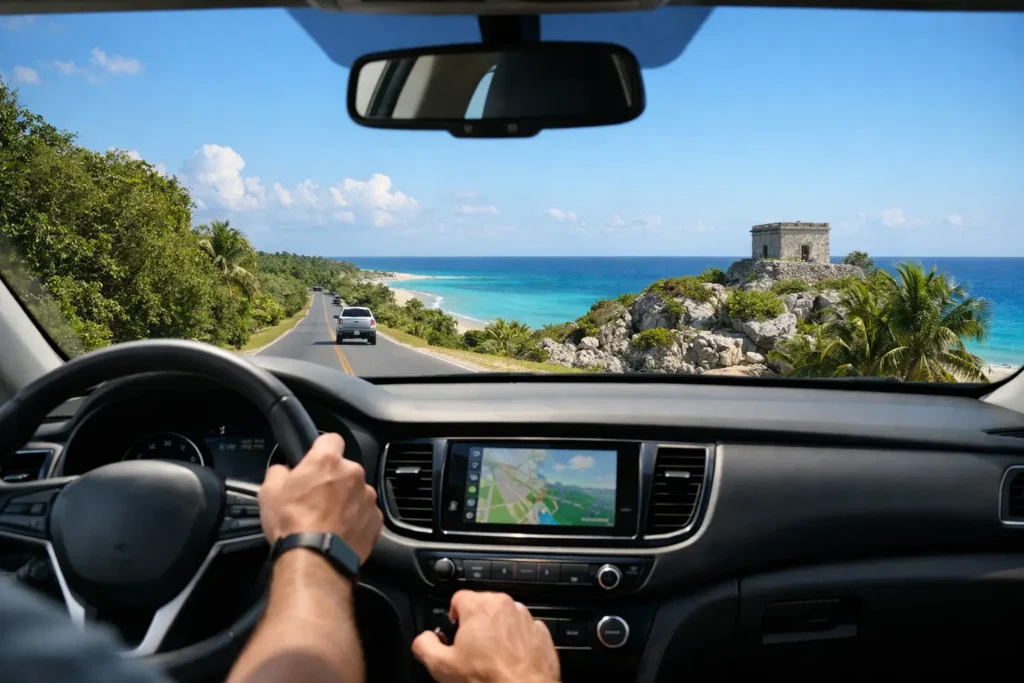
You can leave your hotel in Cancun after breakfast and be swimming in a cenote, eating in Valladolid, or walking Fifth Avenue in Playa del Carmen by noon. That freedom is the best part of having a car here, but safe driving in Riviera Maya depends on knowing a few local habits before you hit the road.
The good news is that driving around the area is usually straightforward. Major routes are easy to follow, distances are manageable, and most visitors do just fine. The mistakes that cause stress are rarely dramatic. They are usually simple things like missing a speed bump, parking where you should not, driving after dark on an unfamiliar road, or assuming local traffic works exactly like it does back home.
Why safe driving in Riviera Maya starts before the engine does
A smoother trip begins with small decisions made in advance. If your plan includes airport pickup, hotel check-in, beach clubs, ruins, and dinner reservations, it helps to map your day with realistic timing. The Riviera Maya looks compact on a map, but traffic near Cancun, Playa del Carmen, and Tulum can slow things down more than first-time visitors expect.
Choose a car that fits the trip you actually have. For most travelers, a compact car or sedan is enough for moving comfortably between towns, beaches, restaurants, and attractions. A smaller vehicle also makes parking easier in busier areas. If your priority is simple transportation without extra hassle, practical models tend to be the smartest choice.
It also helps to check your route before leaving, especially if you will be arriving late or changing hotels. Mobile signal is generally good on main roads, but relying only on live navigation is not ideal. Save your destinations ahead of time and keep your phone charged. That one habit solves a lot of avoidable detours.
The roads you will probably use most
If you are staying in Cancun or anywhere along the coast, you will likely spend time on Highway 307. This is the main corridor connecting Cancun, Puerto Morelos, Playa del Carmen, Akumal, and Tulum. It is the backbone of the region, and for visitors it is usually the easiest road to understand.
That does not mean every stretch feels the same. Near cities and tourist zones, traffic can build fast, especially around midday, late afternoon, and weekends. In quieter sections, the road may feel open and simple. That change in pace matters. Drivers sometimes get too relaxed on easier stretches and then reach a town entrance with reduced speed limits, crossings, or uneven traffic flow.
Some inland routes are also common if you plan to visit cenotes, archaeological sites, or smaller towns. These roads can be perfectly manageable, but they often require more attention. Lighting may be limited, lane markings may be less clear, and roadside activity can change without much warning.
Local driving habits to expect
The fastest way to feel confident is to expect differences instead of fighting them. Drivers in the area can be assertive, but that does not automatically make the roads unsafe. It just means you should stay alert, keep extra following distance, and avoid sudden reactions.
One of the biggest surprises for visitors is the number of speed bumps, often called topes. Some are clearly marked. Others seem to appear right when you thought the road would stay smooth. If you are entering a town, passing schools, approaching convenience stores, or driving through residential areas, slow down early. Hitting a tope too fast is one of the easiest ways to turn a good day into an expensive one.
Motorcycles, delivery scooters, pedestrians, and cyclists also share the road in ways that may feel less predictable than in the US. In beach towns and downtown areas, people may cross where convenient rather than only at marked intersections. A defensive mindset helps more than a fast one.
Driving at night: possible, but not always ideal
Plenty of travelers drive after dark without issues, especially between major destinations. Still, if you have the option, daytime driving is easier.
Night driving changes the equation in a few ways. Road signs are harder to spot, some local streets have limited lighting, and topes become easier to miss. Add rain or fatigue after a full beach day, and even a short drive can feel longer than expected.
If your flight lands late or your dinner plans run long, the smart move is not to panic. Just drive more conservatively, stay on major roads when possible, and avoid experimenting with unfamiliar shortcuts. Getting there ten minutes later is always better than getting there stressed.
Parking without the guesswork
Parking is one of those details that seems minor until it is not. In Cancun, Playa del Carmen, and Tulum, parking rules vary by area, and busy zones fill up quickly.
Hotel parking is usually the easiest option, but if you are heading to beaches, restaurants, or shopping streets, take a minute to confirm whether a spot is actually allowed for public use. In some places, informal parking attendants may approach you. Sometimes they are genuinely helping organize a crowded area. Sometimes the situation is less clear. If a parking setup feels unofficial or confusing, look for a better spot.
Do not leave valuables visible inside the car, even for a quick stop. That is basic travel common sense anywhere, and it applies here too. A bag, phone, or camera left on a seat attracts the wrong kind of attention.
Weather changes how you should drive
The Riviera Maya is made for road trips, but weather still gets a vote. Rain can arrive quickly, especially during warmer months, and roads that looked simple in dry conditions can become slick fast.
When it rains, reduce speed earlier than you think you need to. Visibility can drop quickly, and standing water can hide potholes or uneven pavement. Beach sandals and wet clothes may be part of the vacation mood, but behind the wheel it is better to stay focused and comfortable.
Heat matters too. A long day in the sun can make drivers more tired, more dehydrated, and slower to react. If your plan includes multiple stops, cenote visits, and a late dinner, build in a break. Safe driving is not only about the road. It is also about your energy level.
Practical tips for safe driving in Riviera Maya
The best driving strategy here is simple: stay predictable. Use turn signals, slow down early near towns, and do not assume the car behind you will give you much space. If another driver wants to move faster, let them. Vacation is a bad time to prove a point.
Fuel planning is also worth a little attention. Gas stations are common on major routes, but you still do not want to push your luck with a nearly empty tank on an unfamiliar day trip. Fill up before longer outings, especially if you are heading inland or planning several stops.
Keep your essentials easy to reach but not scattered around the car. Driver’s license, rental documents, phone charger, and water should all be accessible. Small conveniences matter when you are parking, checking directions, or adjusting plans on the go.
If you are traveling with kids or luggage, give yourself a bit more time getting in and out of busy areas. Rushing is when minor mistakes happen. A practical rental experience helps a lot here, especially when pickup is straightforward, terms are clear, and you are not losing time sorting through confusing add-ons. That is one reason many travelers prefer a provider like Roady when they want the process to feel easy from the start.
What visitors usually get wrong
Most problems come from overconfidence, not from the roads themselves. Some visitors assume every destination is a quick hop from the last one. Others try to fit too much into one day and end up driving tired, hungry, or after dark when they did not plan to.
Another common mistake is ignoring the basics because the setting feels relaxed. The Caribbean background can make everything feel casual, but road safety still runs on the usual rules. Wear your seat belt, avoid distractions, and skip alcohol entirely if you are driving. Plenty of beach clubs and dinner spots make it tempting to be flexible on that point. Do not.
It also helps to accept that a perfect itinerary is less valuable than a comfortable one. If traffic is heavier than expected or parking near a popular beach is a mess, adjust. The whole point of having a car is freedom. Use it to make the day easier, not tighter.
Driving in the Riviera Maya does not need to feel complicated. With a little planning, calm habits, and realistic timing, it can be one of the easiest ways to enjoy more of the region at your own pace. Leave room for the unexpected, keep your decisions simple, and the road becomes part of the trip instead of a source of stress.